Schlagwortarchiv für: berlino schule

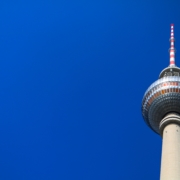
Second stop: Fernsehturm … But what is it exactly? All you need to know about the Berliner TV tower

Not just a symbol of the German capital city! The Berliner Fernsehturm has got a complex history behind its back

As a multifaceted country, Germany hides lots of secrets and interesting cultural places. Berlin offers different fascinating monuments, such as Brandenburger Tor, Berliner Dom and the German Parliament (the so-called Reichstag). Last but not the least: the huge Fernsehturm. But, apart from being one of the most popular attractions of the German capital city, what is exactly the Fernsehturm?

Some bits of history


Fernsehturm is actually a “television tower” for radio and TV broadcasting stations in central Berlin. An essential building with a long political history behind its back. For instance, during the division of Germany in East and West Berlin, the monument was a simple antenna. It was indeed built under the directive of the German Democratic Republic (known as GDR) inside the eastern part of Germany, so that it could be seen from anywhere in the country, especially from West Berlin. Its main purpose consisted in showing how modern and functional was GDR. The building was built under a political strategy: at first, it should have been constructed in the South-East part of Berlin. However, the works were then interruped because of its proximity to the airport. It could, therefore, have caused issues with the flights. The Berliner TV tower was then built in a central part of the city, becoming the new symbol of the German capital city. 

At the end …

On October 3rd, 1969, Walter Ulbricht inaugurated the TV Tower and since October 7th, 1969, (The Republic Day) it has been opened to the public. Located in Alexanderplatz, Fernsehturm is 368 meters high. During the sunny days, you can also notice a cross on its surface, formed by the sunrays (known as “the Pope’s revenge”). German Democratic Republic tried to solve the problem, but without any success.

Photo by Michael Jin on Unsplash

German is spoken in Hollywood, too! 15 celebrities that surprisingly speak German

When it comes to catching and reproducing sounds, such as an accent, a language or a melody, both actors and musicians are great talents.
However, only a very few of them did ever try their best with German sounds, whether for working reasons or family origin.
Here is a list of German-speaking worldwide celebrities.

Bud Spencer

Carlo Pedersoli, also known as Bud Spencer, was born in Naples and moved to Rome with his family when he was young. Together with his film partner Terence Hill, the actor was very popular in Germany. Indeed, his biography, “Mein Leben, Meine Filme” reached the top of books selling lists, selling more than 100 thousand copies in one year. He gained popularity during the 70s and appeared in numerous German TV shows. Not only a successful actor and swimmer, the actor could also speak numerous languages, including German. 

Sandra Bullock

People’s Most Beautiful Woman of 2015, highest paid actress worldwide in 2010 and 2014, Oscar-winning in The Blind Side. Sandra Bullock was born in Arlington, Virginia, daughter of John Bullock, an army employee and Helga Mathilde, a German voice teacher. The couple met in Nürnberg, when John was working at the Army’s Military Postal Service base in Europe. Despite she was born in the US, Sandra Bullock lived in Nürnberg until 12.

Chris Pratt

Marvel’s Star-Lord learned German at school. The actor, which boasts German origin from paternal side, has revealed his enthusiasm for Goethe’s language in tender age.

Leonardo di Caprio

Perhaps more famous for his Italian origin, the actor boasts also strong German origin by his mother’s side. German was Leonardo’s second language at home, where he got to practice in particular with his maternal grandmother. Despite his German has shrunken, the actor still knows how to impress his public.

Mark Strong 

Mark Strong, born as Marco Giuseppe Salossia, is the son of an Austrian mother and Italian Father. Besides his numerous Award-nominee for Best Supporting Actor, Mark Strong is also popular for his German language skills. In particular, the actor attended German Law classes at Ludwig Maximilian University for one year, before returning to England and pursue the acting career.

Kirsten Dunst

Her dad was a German doctor from Hamburg, and her mother, of Swedish descent, worked as employee at Lufthansa. Kirsten learned German mainly at home. In 2011, the actress gained German citizenship.

Paul McCartney 

Beatles bass-guitarist and co-singer Paul McCartney learned German at school. Yet, it was only at the very beginning of his musical career, that the artist came across the German culture.
In fact, Hamburg played a fundamental role for the band’s success. Allan William, the owner of a music coffee bar in Liverpool, was organizing a tour in Germany for the Liverpool band The Seniors. Eventually, the owner ended up replacing the Liverpool group with The Beatles. The band was still unknown at the time. From 1960 to 1962, the band launched their career by playing in famous clubs, residencies and by working/ recording in professional studios of the city. Click here for Bild’s full article.

Terence Hill

Terence Hill was born Mario Girotti by Italian Father, Girolamo Girotti, and German mother, Hildegard Thieme.
The family moved to Dresden when Hill was four, where they survived the Bombing of Dresden. He spent his childhood in Germany, before moving to Venice.

Gene Simmons (Kiss) 

Kiss’s singer Chaim Wits, also known as Gene Simmons, was born in Haifa, Israel, to Jewish immigrants from Hungary. His mother, who survived the Nazi camp, spoke fluently German and taught both German and Hungarian to her son. Besides German, the singer speaks numerous language, including Hungarian, English and Hebrew.

Vladimir Putin

The former Colonel of KGB’s intelligence office and the current President of Russia, Putin has shown its good German skills numerous times.
The President studied German at Saint Petersburg High School and spent 5 years in Dresden, working for KGB.

Michael Fassbender

The actor was born in Heidelberg but was raised in Ireland, by Irish mother and German father. Michael speaks German fluently. Perhaps, his good German convinced Tarantino to choose him for playing the British officer Lieutenant Archie Hicox.

Kim Cattrall

Sex and the City’s Samantha Jones was married from 1982 to 1989 to Andre Lyson, with whom she lived in Frankfurt and learned to speak German.

Karl Urban

Famous for his roles of Éomer in The Lord of the Rings’, as well as Leonard McCaoy in Star Trek, Karl Urban was born and raised in New Zealand. However, his father was German and used to speak German at home.

Sarah Chalke 

Every Scrubs’ fan knows it well: Sarah Chalke’s German is superb. For that reason, you might see her performing some German in various sketches of the TV comedy.

Donna Summer

LaDonna Adrian Gaines, or simply Donna Summer, was an American singer and actress. During her career, Summer moved to Munich after obtaining the role of Sheila in the counterculture musical Hair. During her time in Germany, she became fluent in German, eventually singing various song in that language.


Photo: Screenshot Youtube 
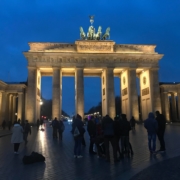
Brandenburger Tor is the real heart of Berlin, that’s why you cannot skip it

If you are planning a trip to Berlin, Brandenburger Tor is a must. You cannot skip it for many different reasons. In this article, we will try to explain why

Brandenburger Tor is the core of the German capital. In fact, it represents the symbol of the reunified Germany, after all the political, economic and social problems Germany faced after the Second World War. In 1961, Brandenburger Tor was located inside the famous “no man’s land”, that is the patch of land which has been conceived to split East Berlin and West Berlin.

Brandenburger Tor was inagurated in 1791 and symbolizes the victory of Peace over War. For the structure, the Acropolis of Athens had been taken into consideration as an inspiration. And this is exactly why, a Bronze Quadriga has been placed right on the top of the monument, as it represents the Greek goddess Eirene (designed by Johann Gottfried Shadow), used as a symbol of the Prussian victories. The position of the statue was changed by GDR in the opposite direction, and since then it has been no longer moved. 

The monument is characterized by a neoclassical architecture and it is 26 meters high. You can enter it through 5 different gates. In the past, the main entrance was reserved to the royal family, and of course “very normal people” could use only the 4 ones left. The two lateral structures, built in 1868 by the architect Johann Heinrich Strack, were used as checkpoints; now, you can find two sculptures, representing Mars and Minerva.

The Brandenburg Gate has gone through different historical events, from the triumphant March of Napoleon to the visit of Kennedy, and not to mention the Nazis parades and Hitler’s speeches, until the Fall of the Wall in 1989.

Photo: Debora Fieni and Raman Kaur

How much do you know about German? 6 interesting facts about Goethe’s language

Did you already know that German people can create more than 23 millions words with only 26 letters of the alphabet?! How much do you know about the German language? After reading this article, you will get a better idea!

How many people speak German as a native speaker?

The German speakers, namely those who speak German as first or second language, are almost 130 million worldwide. German is not only the official language in seven countries, but also one of the most spoken languages in the UE. A German-speaking minority (about 7,5 million people) lies scattered in 42 countries.

How many people study German as a foreign language?

289 million! According to some research led by the germanist Ulrich Ammon, almost 289 million people have decided to study German during their life. Can they speak German fluently? Who knows. That’s another kettle of fish. However, the current number of German learners is around 15,4 million, 90% of which are young students.

How many words does the German language have?

Well, far more than you might expect and German learners can confirm it. Mixing two or more words to create a new one is easy job for German speakers. Therefore, a true answer to this question does not exist. In 2013, a Berliner linguistic found 5,3 million words. Only four years later, the Duden editorial staff published a total amount of 23 million words (only basic forms). The result came up from a great collection of technical and literary works (4000 books). Not to mention that the latest Duden edition shows a shrunken amount of 145.000, but native German speakers tend to use only 12.000-16.000 words. 

Which words are the most frequently used?

  • Gold medal: DER, DIE, DAS (the determined articles, which German students should learn by heart in combination with the noun that follows)
  • Silver medal: IN, the preposition
  • Bronze medal: UND, the conjunction

Which is the longest word?

According to Duden, the German longest word is “Aufmerksamkeitsdefizit-hyperaktivitätsstörung”, that means “attention deficit and hyperactivity disorder” and boasts 44 letters.

What is the International Mother Language Day for?

Purpose of this commemoration is to celebrate the importance of language as a part of the cultural identity of a population, as well as to raise awareness about the risks languages are being exposed to, due to the globalization. Nowadays, almost half of the 6000 languages spoken worldwide are in danger. German is not one of them, yet several German’s dialects are about to disappear. In particular, the Atlas of the World’s Languages in Danger depicts the North Frisian and the Saterland Frisian as the most endangered languages within the German area. 


Photo: PourquoiPas Pixabay 

Party in Berlin? Then, you should learn these 10 typical German expressions

Berlin is famous for its alternative and excessive night life as much as Hamburg and Cologne. The international newspaper Deutsche Welle points out some words we should know to get ready for a night out in the German capital city.

FEIERABEND

Ready for a wild night in town? First thing first, it’s important to be stress-free from work. And Germans have the right word to mean the end of a working day: Feierabend, which literally means “holiday evening”. Unless you are a professional DJ, not every day can end with a party. But every Feierabend, is a good chance to join one.

AUFBREZELN

After work, a pit stop at home is what you need to start your night in the best way. Especially if you’re planning to go to an elegant and chic party. In this case, you should “dress up to kill”. Aufbrezeln just means this. High heels and a touch of lipstick for girls and a fresh shirt for boys are the necessary requirements. You never know where the night will end up. You could meet someone interesting.

VORGLÜHEN

Going out in group can be both funny and cheap. Having a drink or maybe two or three with friends is a good excuse to break the ice. Vorglühen is the German word for this. German bier might not always be loved by everyone but you have to admit that after one or two bottles you feel your feet above the ground. And ready to conquer the world.

WEGBIER

If you take a bier with you before the party, you can call it Wegbier or “take away bier”. In Germany, drinking bier on the streets is legal, as long as you behave and keep yourselves together.

AFTER-WORK PARTY

The number of after-work parties is increasing in the last years. What seems to be a retirement party, it is an actual after work party.

TÜRSTEHER

If you are going to a chic area of Berlin and Hamburg, it’s necessary to pass the bouncers which in German are called “Türsteher”. It literally means “the one who stays at the door” and somehow, surveils it.

AUF EX

If your German friends tell you to finish your drink “auf ex”, you better be ready to what is going to happen next. It believed to come from Latin but there is no document to prove it. Although, the translation is clear: kill your drink in one sip.

DÄMMERUNG

It’s the moment between day and night. And between night and day. So the beginning and the end of the day in one word. And if it was a cool night, it’s more likely that it will finish in the Dammerung.

NACHTSCHWÄRMER

The moment between twilight and down is when the night owls come out from their caves, offices and houses and head to bars, pubs and clubs. In one hand, residents complain about the screams and noise in the night. But in the other hand, bars’owners and taxi drivers thank the NachtSCHWÄRMER for their contribute to the city’s finance.

KATER

The term has two meanings and somehow, a bit ambuguous. Kater is the German version of ‘male cat’ but it means ‘hangover’ as well. The feeling that everyone knows after a wild night out. Also, Kater, comes from the Greek word ‘catarrh’. Which seems weird. The right English word is Hangover but, anyway, who cares about the meaning? Especially after an amazing night.


Why on earth are there 15 ways to say meatball? All the possible variations of the most used words in German

When deepening your knowledge of a foreign language, you will start to feel more comfortable about it, yet you will keep hearing words that are new to your “personal vocabulary”: there is still much to be done to achieve bilingualism. This is what usually happens with German, for instance, which not only is it harder for its syntax than other languages but it also has a wide range of vocabulary. You will feel discouraged to know that German has a wide range of words that can either vary according to their language register or to the region they belong to. If you have the intention of feeling part of the community, therefore, it is recommended to know, if not all of them, at least a few of the possibile variations of the most used words in German. A few examples listed below are concerning the local cuisine.

PANCAKES

If you happen to order some Pfannkuchen in Berlin, you won’t get the usual pancakes you might expect, yet jam-stuffed doughnuts! More broadly, there are 12 different ways to say “pancakes” in German. The Pfannkuchen is a calque of the English word which stands for the actual pancakes. However, in the area of Berlin it is more likely the hear Eierkuchen when referring to pancakes, while das Omelett is typical of Western Germany and die Omelette is commonly used in the area near Switzerland. People living at border with Poland and in Leipzig would call them Plinse or Plinz; Palatschinke in Austria.

GINGERBREAD MAN

Talking about desserts, there are 12 ways to say “gingerbread man” in German. Those typical Christmas cookies are called Lebkuchenmann in Eastern Germany, Munich, Berlin and Hannover; Weckmann o Weckmännchen  in South-Western Germany; Stutenkerl in North-Western Germany. In Austria it is commonly known as Krampus, a legendary creature that, during the Christmas season, punishes children who have misbehaved. In Stuttgart and Karlsruhe is Dumbedei. The several variations not only depend on the geographical area but also on the ingredients and spices used in the recipe. Spekulatius, from the Belgian Speculoos, is also a widepread way in Berlin to call those spicy cinnamon cookies.

MEATBALLS

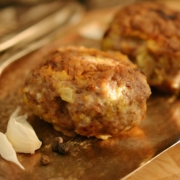
When you first move to Germany, you will notice that most of the German cuisine is based on meat dishes: not only will you taste the well-known sausages but you will  also have the chance to try out the German meatballs, which you can easily find at any local store. Although the most widespread is Fleishkloß, there are actually 15 ways to say “meatball” all over the country: they call them Frikadelle in Northwestern and Central Germany or Fleishküchle in the southwest. In Dresden and Leipzig they are known as Klops o Kloß; Fleishaiberl in Austria. Lastly, Bulette or Boulette are typical of Berlin.

We highly suggest you keeping in mind a few of these terms listed above so that you can figure out what you are about to eat!

BREAD

Talking about variations of words concerning food, we need to mention one of the essentials of everyone’s diet: bread and, more specifically, the last chunk of a loaf of bread. This term has loads of variations in Italian, according to the region it is associated with, such as “cozzetto”, “cantuccio”, “gomito”or “culetto”. However, there are more than 50 variantions in German: Kanten, Anschnitt, Kipf, Ranft/ Ränftchen, Knorze, Knust, Rankl, Krust, Kirshte and so on. In Switzerland Anhau, Scherz, Mürggu, Mutsch, Chäppi, Houdi  are the most used, while Scherzerl  is typical of Southern Germany and Austria.

HICCUP

Let’s change topic! There are at least 25 ways to hiccup in German. The first word that might cross your mind could be either Schluckauf or Schluchzer. You might hear people say Hädscher in the south of Germany and in the areas bordering France; Schnackler is a typical Austrian variation instead; lastly, Hitzgi is characteristic of Switzerland.

SLIPPERS

It is an easy-peasy word which has a lot of equivalents in German. You can’t go wrong if you use the word Hausschuhe, which literally means “house shoes”. However, there are 10 ways to say slippers. Pantoffeln sounds like Italian (pantofole) yet it is not spread over cities like Berlin and Hannover, just like Schluffen mostly used in Frankfurt and in the state of Rhine. Bambuschen, again similar to the Italian “babbucce”, is frequently used in the east of Germany. Lastly, if you are in Switzerland you will be more likely to hear Finken.

Photo by Christian Wiediger on Unsplash

9 German expressions you will never be taught at school

Ready to start talking to native German speakers? Then, you should learn nine typical German expressions

If you think you are ready to do the big step after spending years in language centres for high-priced lessons – that is to start to live among native speakers – this is not the case when it comes to German. You may be disappointed with your own knowledge when trying to get through an ordinary day in a German-speaking country. Most of us are used to both speaking and listening to English slang, but it does not occur when talking about German. At school you do not get to learn the most frequently used German expressions, like the ones listed below. Once you get the hang of it, you will feel like a real German.


NA?


While getting to know Germans you will notice that even some expressions that at first  sounded easy to you are actually totally different from what people say in their everyday life, such as Wie geht’s dir? Na?  (How are you doing?), frequently used with someone you are really close to.


NAJA


Do not confuse Na? with Naja, which expresses doubt and puzzlement, just like “well,..” or “meh”.


QUATSCH!


It is a frequently used expression which sounds like “Bullshit!” and can be used in a sentence such as Das ist totaler Quatsch!, to say that something is completely nonsense.


MACH’S GUT!


People usually use mach’s gut!  in place of the most common Tschüß when saying goodbye to someone. Mach’s gut literally means “do it well” but it is normally translated as “take care!”.


QUASI, SOZUSAGEN, HALT


“Kinda”, “like”, “sort of”, are massively used by youngsters and common people in their everyday life, as well as in Italian, English and German. These expressions make any conversation more informal but be careful to not exaggerate!


KRASS


It is an expression for astonishment and has both a positive and negative connotation. The English equivalent would be “cool”, “great”, “sick”.


GEIL


Once you have got the meaning of this word you will not stop using it or listening to it on the streets to describe something that is “awesome”, “cool”, “rad”, “dope”, or even supergeil, as Friedrich Liechtenstein sings in a popular Edeka’s commercial . Be aware that this word has originally a different meaning conveying a sexual connotation, like “horny”, reason why you should avoid using it in any formal context.


JEIN


Jein renders the idea of uncertainty and is made of ja+nein. So, in case you are on the fence or hesitating, just say “jein!”.


AUF JEDEN FALL


German native speakers make a massive use of it, also in place of natürlich to utter “of course!”.

Not only in Germany! 10 German words which are commonly used also in other languages

The German language: not as foreign as we think

It’s a fact, that learning German is not easy at all. Anyone who wants to learn this language must deal with a complex grammar, the existence of three genres (masculine, feminine and neutral), the length of the words and the basic unfamiliarity of each sound. In order to make the learning of German easier, we may remember that many words from German are actually used globally as an important part of the common language. For example, look at the following terms: Müsli, Strüdel, Kitsch, Bunker or Realpolitik. As we can see, the Teutonic influence is quite obvious in many different fields: food, culture, military or politics. Now, let’s focus on the most commonly used worldwide German words:

Hinterland

Literally meaning “the land behind”, is a common word in English, French, Spanish and Italian. Hinterland stands for “backcountry” or “a remote area of a country away from the city centre influenced by economics, society and culture”. For example, in Italy we often hear of “hinterland milanese”.

Schadenfreude

Common word used in English to express “joy” or “satisfaction” for one’s misfortunes. The Italian translation is “gioia maligna”.

Kindergarten

Literally “children’s garden”, it can be used in English as a synonym of “nursery school”.

Zeitgeist

This is a worldwide term used to express “the spirit of the time”. The expression comes from philosophy to indicate the ideal climate, culture and spirit (considered as characteristic of an era).

Wanderlust

Literally meaning “desire of walking” is commonly used in English in order to express “the craving for travel”.

Leitmotiv

Literally “guiding reason” is a global word which indicates “a motif or constant aspect of a literary or musical work” but also of “activities, manifestations and different behaviours”. Apart from the musical field, it has also become common to others.

Wunderkind

In English “wonder/prodigious child”.

Doppelgänger

It means in English “body double/alter ego”.

Spiel

Literally “play or game”. This term is used in English with the meaning of “eulogistic speech” or “long and boring speech”.

Delicatessen

Commonly shortened in Deli in English, Delicatessen means “culinary specialities shop”. The German word Delikatesse, which stands for “deliciousness”, derives from délicatesse, or “delicacy”.

Documentary Filmmaking, in Berlin the new course by the Daring House Film Production

Create your own short documentary in six classes!

Berlino Magazine and Berlino Schule in collaboration with Daring House Documentary School are hosting a basic module about Documentary filmmaking. On 2th October there will be a free presentation of our Filmmaking course. The workshop will then continue with classes on Tuesdays, from 20:00 till 21:30 for 5 weeks at Daring House Studio, Auguststraße 88, 10117, Berlin-Mitte.

Course objectives

Now more then ever digital technology allows people to express their own vision of reality – and this is what our course is about. In a set of structured meetings, attendees will learn how to find, shoot and edit a story, in close interaction with an enthusiastic group of people. The films will then be presented at a short documentary film festival held in Berlin, with an awards ceremony and attendance certificate for everybody.

The course will let you create your film FOR REAL. During classes, you will use your own camera and have a look at videos of nice and established filmmakers.

The module is for those who want to try their hands at filmmaking as a hobby or are considering making it a profession; for journalists wanting to expand their audiovisual skills; for film-enthusiasts wanting to learn the process of filmmaking.

The course will be held in English and the instructor also speaks fluent German, Italian and Spanish.

Program

Class 1 – Filmmaking 101 – 2.10.2018, 20:00-21:30 – FREE TRIAL LESSON.

– What is a documentary? Break free from the accepted rules and create your “own” story.
– Tragedies, illnesses, catastrophes and sad people. Why you should try (also) to tell happy documentary stories.
– How are documentary stories told? The different styles of storytelling: real life, interviews, with or without a host, mockumentary.
– Any story is a good story if well told. The approach to find a story and the importance of personal feelings in storytelling.
– What do I need to shoot: camera/smartphone, pc.
– Writing or not writing? How far should filmmakers go with their script.

Class 2 – Working with your story – 09.10.2018 – 20:00-21:30

– How to tell if a story is worth being told
– Red flags 1: stories you should avoid.
– Red flags 2: people you should avoid.
– How too approach a person to shoot a documentary.
– Shooting: how to make your story appear natural.
– The “fly on the wall”: how to disappear behind the camera.
– Emphatic listening and the key to good interviews.

Class 3 – Hands on your camera – 16.10.2018 – 20:00-21:30

– Basics of smartphone cinematography. How to hold a smartphone camera and how to operate it.
– Basics of camera cinematography avoiding zoom and multi-focal lenses.
– Audio: why a good sound is more important that good images.
– Shooting with natural light.
– Creating a shooting frame: concepts of shooting aesthetics.
– Project pitching! Suggesting stories and creating shooting teams.

Class 4 – Editing – 30.10.2018 – 20:00-21:30

– Basics of editing: please start telling your story from second 1.
– Why knowing editing is important to shoot good images.
– Editing with free programs.
– Editing with professional programs.
– Documentary dramaturgy: please don’t bore your audience.
– Creating emotions with editing. How to play an audience like an instrument.
– “Kill your darlings”: why your personal shooting experience is different than the story you are telling.
– Working with music: from Dogma to La La Land.

Class 5 – Rough-cut workshop – 06.11.2018 – 20:00-21:30

– Review of the projects and tips to make them even better.
– Closing a project: why “films projects are never finished, but abandoned”.
– Basics of subtitling.

Class 6 – How to call yourself a filmmaker and closing the final cut – 11.12.2018 – 20:00-21:30

– Review of the projects and tips to make them even better.
– Dreaming about a filmmaker career? Here’s what you need to know.
– Don’t trust the festival. A quick guide to festival submissions.
– “We are all dead” and other depressing statements by filmmakers and artists in general.
– The documentary film industry. How to have fun making film art and live happily.
– Preview of the following modules.

Price

The course costs 175€.

The teacher

Stefano Casertano is an award-winning filmmaker living in Berlin since 2006, CEO of the production company Daring House. His last film as director “People of Love and Rage” won the Eindhoven FIlm Festival and the Special Mention of the Jury at the Rome Independent Film Festival. As a producer, his animated short “The Ballad of the Homeless” screened at the Cannes Film Festival, won a Nastro d’Argento, was a candidate at the David di Donatello and won the LA Short Fest, being shortlisted for the Academy Awards. Stefano is currently producing his fourth documentary “Eighteen Penalties” about the story of the football matches between Italy and Germany produced by Istituto Luce and Lichtblick Film, with the support of the Italian Ministry of Culture and the German Film Funding Institute. Stefano also serves as producer and filmmaker for video productions for media outlets such as El Paìs, Sky, La7, RBB and Rai. Before embarking in his film career, Stefano completed an MBA in Media and Communication at Columbia University in New York and a Ph.D. “Magna cum Laude” in International Politics at Potsdam University in Germany. He has been international correspondent for Linkiesta.it, Finanza & Mercati and Pagina99, and his articles have appeared on World Affairs, Project Syndicate and RealClearWorld.

Advanced modules to be scheduled:

– Documentary filmmaking advanced module

– Immerse yourself in a story and create a structured film plan. Basics of color and audio correction.

– Documentary filmmaking technical module

– How to shoot a video with a reflex camera

– Music videos – How to shoot a music band

Documentary Filmmaking Course

6 lessons from Tuesday 2nd of October. from 20:00 to 21:30

2nd October 2018: free trial lesson (20-21.30).

Facebook event

Lessons will be held at Daring House – Auguststraße 88, 10117, Berlin.

The course costs 175 €

INFO AND REGISTRATION

For info and registration send us an email at: info@berlinoschule.com with object: Filmmaking

How to memorize 18 German words without getting a headache

German continues to be a source of inspiration in many ways. The fact that it is still a cryptic language for many is not a novelty.

Learning German is for many an impossible task due to, amongst other things, the many consonants placed close to each other and the rigid pronunciation of words. The structure of the sentences, the syntax, still puts the most talented Germans in crisis. The Germans themselves often admit that they do not know the meaning of a term and therefore use the famous Richard Porson’s saying that “life is too short to learn German.”

German words

To make the whole thing even more grotesque is the (in)famous German morphology with its endless composite words, one of which has even entered the Guinness Book of Records as the longest word in the world: Rechtsschutzversicherungsgesellschaften (companies that provide legal assistance). And if long words were not enough, then there are those that in a few syllables contain a myriad of different meanings, impossible to synthesize in English in one word. Here is a list of the most bizarre and astrus ones selected by the site Fluentu!


18. Ohrwurm= earworm [for instance when you hear a song on the radio and can’t get it out of your mind throughout the whole day]


17. Fernweh= longing for a distant and unknown place


16. Kummerspeck= literally, grief bacon, in context it is having an emotional belly [or the need to eat to console your belly following a disappointment]


15. Innerer Schweinehund= inner pig/dog [it is that very powerful animal that lives within us that we must overcome when we have to do unpleasant things, like paying taxes and going for a jog at 6am before work]


14. Fremdschämen= feeling shame for someone else


13. Torschlusspanik= panic of the closed door [it is commonly employed to address a woman whose biological clock is ticking]


12. Treppenwitz= staircase joke [it occurs when the right joke comes to your mind when it’s too late, as if you have a pleasant meeting on the stairs and you have no time to say the right thing]


11. Lebensmüde= life tiredness


10. Weltschmerz= pain of the world


9. Weichei= soft egg [N.B. never say that to a waiter in Germany, for the actual meaning of the term is to address someone that is cowardly and has “soft balls”]


8. Backpfeifengesicht= face you would like to slap


7. Erklärungsnot= need to explain [have you been punished and didn’t even have the time to realize it? Then claim your Erklärungsnot!]


6. Sitzfleisch= seat meat [a character trait, to have big shoulders. For the German collective imagination it is like having a sac of meat on your seat due to an excessive state of boredom]


5. Purzelbaum= tumble tree [Somersault! Roll on the floor as if you were a piece of tree trunk]


4. Dreikäsehoch= three, cheese, above [a term for children employed towards that kid in the class that is taller compared to others, as tall as three pieces of cheese on top of another]


3. Zungenbrecher= tongue twisters [read about hilarious German tongue twisteres here]


2. Schattenparker= shadow parker [are you trying to be smart and park your car in the shade to protect it from the heat? This term is not actually meant as a compliment, but more as an insult]


1. Kuddelmuddel= unstructured mess


If you read until here and now your head is fully of screws and you are thinking that the German language is like a witty mosaic, an unstructured mess, then this is the word that you need right now.


Do not be discouraged, German is a very charming language and with some commitment everyone can succeed in mastering it. And studying German is also a good way to overcome the sense of Lebensmuedigkeit and stop using google translate which, let’s say it, never gets it right. And additionally to be taken for a Schattenparker that doesn’t commit does not please anyone. In the end, there are surely other Weltschmerz that are worse than learning German. After a thousand Kummerspecken overcome thanks also to the strength that you have gained by experiencing the Torschlusspanik, you can go out with your German friends and also take their order when you go to the restaurant. And this time without any of them feeling Fremdschämen for you.

You can finally be totally proud of having overwhelmed your Innerer Schweinehund. It is the same feeling of when, as a child, you felt so powerful after succeeding in a new intent. When you felt that you stood out like a Dreikäsehoch. You have gone a long way and now you have your Sitzfleisch. After a thousand nights spent on a thousand absurd Zungenbrecher until they become actual Ohrwurm. You will not be considered a Weichei anymore, and surely this time you will be able to talk to your new neighbors without fear of falling into any Treppenwitz. Except if it’s your girlfriend, in that case you’d risk a proper Backpfeifengesicht. Be careful not to combine any Kuddelmuddel or to use your Erklärungsnot!

If after all this you still want to stay and do not experience any sea sickness or Fernweh, there is nothing left to say or do than return to your inner child and gain thousands of well earned Purzelbaum!

Cover photo: © Alexandre Normand CC BY SA 2.0


Want to learn German in a vibrant environment? Look no further and check out the German courses that Berlino Schule organizes by clicking here!

Schlagwortarchiv für: berlino schule