
Schlagwortarchiv für: german

German is spoken in Hollywood, too! 15 celebrities that surprisingly speak German

When it comes to catching and reproducing sounds, such as an accent, a language or a melody, both actors and musicians are great talents.
However, only a very few of them did ever try their best with German sounds, whether for working reasons or family origin.
Here is a list of German-speaking worldwide celebrities.

Bud Spencer

Carlo Pedersoli, also known as Bud Spencer, was born in Naples and moved to Rome with his family when he was young. Together with his film partner Terence Hill, the actor was very popular in Germany. Indeed, his biography, “Mein Leben, Meine Filme” reached the top of books selling lists, selling more than 100 thousand copies in one year. He gained popularity during the 70s and appeared in numerous German TV shows. Not only a successful actor and swimmer, the actor could also speak numerous languages, including German. 

Sandra Bullock

People’s Most Beautiful Woman of 2015, highest paid actress worldwide in 2010 and 2014, Oscar-winning in The Blind Side. Sandra Bullock was born in Arlington, Virginia, daughter of John Bullock, an army employee and Helga Mathilde, a German voice teacher. The couple met in Nürnberg, when John was working at the Army’s Military Postal Service base in Europe. Despite she was born in the US, Sandra Bullock lived in Nürnberg until 12.

Chris Pratt

Marvel’s Star-Lord learned German at school. The actor, which boasts German origin from paternal side, has revealed his enthusiasm for Goethe’s language in tender age.

Leonardo di Caprio

Perhaps more famous for his Italian origin, the actor boasts also strong German origin by his mother’s side. German was Leonardo’s second language at home, where he got to practice in particular with his maternal grandmother. Despite his German has shrunken, the actor still knows how to impress his public.

Mark Strong 

Mark Strong, born as Marco Giuseppe Salossia, is the son of an Austrian mother and Italian Father. Besides his numerous Award-nominee for Best Supporting Actor, Mark Strong is also popular for his German language skills. In particular, the actor attended German Law classes at Ludwig Maximilian University for one year, before returning to England and pursue the acting career.

Kirsten Dunst

Her dad was a German doctor from Hamburg, and her mother, of Swedish descent, worked as employee at Lufthansa. Kirsten learned German mainly at home. In 2011, the actress gained German citizenship.

Paul McCartney 

Beatles bass-guitarist and co-singer Paul McCartney learned German at school. Yet, it was only at the very beginning of his musical career, that the artist came across the German culture.
In fact, Hamburg played a fundamental role for the band’s success. Allan William, the owner of a music coffee bar in Liverpool, was organizing a tour in Germany for the Liverpool band The Seniors. Eventually, the owner ended up replacing the Liverpool group with The Beatles. The band was still unknown at the time. From 1960 to 1962, the band launched their career by playing in famous clubs, residencies and by working/ recording in professional studios of the city. Click here for Bild’s full article.

Terence Hill

Terence Hill was born Mario Girotti by Italian Father, Girolamo Girotti, and German mother, Hildegard Thieme.
The family moved to Dresden when Hill was four, where they survived the Bombing of Dresden. He spent his childhood in Germany, before moving to Venice.

Gene Simmons (Kiss) 

Kiss’s singer Chaim Wits, also known as Gene Simmons, was born in Haifa, Israel, to Jewish immigrants from Hungary. His mother, who survived the Nazi camp, spoke fluently German and taught both German and Hungarian to her son. Besides German, the singer speaks numerous language, including Hungarian, English and Hebrew.

Vladimir Putin

The former Colonel of KGB’s intelligence office and the current President of Russia, Putin has shown its good German skills numerous times.
The President studied German at Saint Petersburg High School and spent 5 years in Dresden, working for KGB.

Michael Fassbender

The actor was born in Heidelberg but was raised in Ireland, by Irish mother and German father. Michael speaks German fluently. Perhaps, his good German convinced Tarantino to choose him for playing the British officer Lieutenant Archie Hicox.

Kim Cattrall

Sex and the City’s Samantha Jones was married from 1982 to 1989 to Andre Lyson, with whom she lived in Frankfurt and learned to speak German.

Karl Urban

Famous for his roles of Éomer in The Lord of the Rings’, as well as Leonard McCaoy in Star Trek, Karl Urban was born and raised in New Zealand. However, his father was German and used to speak German at home.

Sarah Chalke 

Every Scrubs’ fan knows it well: Sarah Chalke’s German is superb. For that reason, you might see her performing some German in various sketches of the TV comedy.

Donna Summer

LaDonna Adrian Gaines, or simply Donna Summer, was an American singer and actress. During her career, Summer moved to Munich after obtaining the role of Sheila in the counterculture musical Hair. During her time in Germany, she became fluent in German, eventually singing various song in that language.


Photo: Screenshot Youtube 
10 German words that every language should have

They say that the language of a nations reflects its culture and mentality, even more so if there are words that can’t be directly translated in other languages.


These are precisely the most interesting words to study or observe with attention because they allow us to really grasp a different culture and norms. So here are 10 beautiful and intricate German words to learn:

#10 SCHILDERWALD

A forest of road signs. So many road signs that you’ll get confused by all the directions indicated and get lost.

#9 KOPFKINO

To have a mental movie going on. Well, to whom did it never happen? Imagining in our head the best and worst scenarios we would say.

#8 LUFTSCHLOSS

In English we would say “to build castles in the air”. Something desired, but far away from reality: a project or idea that can be hardly achievable.

#7 SCHNAPSIDEE

That crazy idea that you will get in a moment of absolute euphoria, at times caused by an excessive consumption of alcohol. Genius ideas that might reveal to be a total disaster or an acclaimed success.

#6 AHNUNGSLOSIGKEIT

The lack of knowledge, opinions, awareness. According to the context it might indicate being naive, ignorant or ingenuity.

#5 FINGERSPITZENGEFUEHL

An immediate awareness and empathy with our surroundings, that allows us to respond promptly and diplomatically.

#4 STREBEN

The origin of the term resides in the German romantic period, when this word indicated the detachment from everyday life to reach that intangible level of perfection. Today the term indicates the effort and determination required to fullfill one’s ambitions.

#3 GEBORGENHEIT

Most of the dictionaries translate this term simply as “certainty”. In reality there are many more nuances that go over and across the meaning of this word: an incredible combination of certainty, protection and intimacy derived from relations with others, in particular your family.

#2 VERSCHLIMMBESSERN

Making a situation worst in the attempt of making it better. Like trying to fix that bad haircut at home on your own..

#1 WANDERLUST

The desire to leave. That uncontrollable itch that makes you want to travel and explore the world, see new places and make new experiences.

————

Are you getting intrigued by the German language or wish to refine your vocabulary? Then take a look at the German courses that Berlino Schule organizes! 

5 German expressions that you won’t forget easily

Are you studying the language of the devil and you don’t know to which saint to turn to anymore? No panic! We put together an exhaustive list of common German expressions that you will hardly forget. So close your grammar books and follow us!


1. Arschgeige (r. Arsch = ass, e. Geige = violin); literal translation, dipstick / dipshit/ arsehole

The typically German mastery of composing and using of composite words is known throughout the world. Our teutonic hosts have invented all sorts of these, both when sober and under the influence of susbstances. Arschgeige belongs to the second group.

2. Arschbombe (r. Arsch = ass, e. Bombe = bomb); literal translation, cannon ball

We continue the list of composite words with “ass”. And no, it is not referring to the effects of lactose on your flatmate, but to the jumping in the water in a cannon ball.

3. Arschloch (r, Arsch = ass, s. Loch = hole); literal translation, asshole / twat and so on

Yes, if you hear someone calling you an Arschloch you have every right to get mad.

4. Ich habe die Nase voll davon; literal translation, my nose is full / I’ve had enough

From the ass to the nose. This nice and colorful expression is used to describe situations, people, places, things, cities, etc. of which one has had enough of. It is a highly versatile and effective expressive.

5. Null – acht – fünfzehn; literal translation, zero – eight – fifteen

Did you know? Even with numbers you can say so many things in German. Especially if their combination refers to a heavy machine gun used by the German army in World War I. Surely you will have seen it in some documentary or vintage movie, but what you may not know is that in 1914 the infantry’s army’s automatic weaponry was about 12,000 more than the one in the other armies. The Germans were so fond of using the model number as an expression to indicate not an erotic position, but a mediocre person. Evidently the gun did not work very well.


Cover Photo: © Nina Helmer CC BY-NC ND 2.0


Want to learn German in a vibrant environment? Look no further and check out the German courses that Berlino Schule organizes by clicking here!

Brad Pitt nominated as testimonial of the German language in the world. Here’s why.

Throughout his career Brad Pitt has been called a lot of things, but surely he missed the title of being “a promoter of the German language”.

When not busy with the big screen or with humanitarian actions, the actor added another talent to his extensive curriculum. We are talking about the nomination to the tile of Sprachwahrer for the year 2014, an initiative promoted by the notorious German newspaper “Deutsche Spachwelt”. The award was given to someone that has demonstrated its dedication to the language, giving it value and merit. We can therefore define them as “language promoters”.

The actor, that has distant German origins, is in fact one of the most famous German scholars as well as a regular visitor of the country. We recall Tarantino’s “Inglorious Basterds” of 2009 that was shot in the studios of Studio Babelsberg in Potsdam. Estimator of the Teuronic art, he expresses with enthusiasm his passion for the language by saying “I like German, I even find it beautiful and melodious” as reported in Kölner Express.

The title is, however, very controversial and amongst the other formidable contenders we remember: Monika Gruber, the German cabaretist famous for her politically correct linguistic manipulation, Heike Diefenbach and Michael Klein with their battle fought with words and petitions, working towards an ideological and free scientific language. Last but not least Johannes Singhammer, vice-president of the German Parliament, appointed for his tireless actions in promoting the German language.

Amongst the winners of the previous editions we remember the Deutsche Bahn (the German railway), Loriot (a famous German comedian, in 2011) e pope Benedetto XVI (in 2005).

Photo © Red Romero Ramos CC BY SA 2.0


Wish to become like Brad and get nominated yourself as “promoter of the German language”? Then take a look at the German courses that Berlino Schule organizes in the heart of Berlin by clicking here!


How to memorize 18 German words without getting a headache

German continues to be a source of inspiration in many ways. The fact that it is still a cryptic language for many is not a novelty.

Learning German is for many an impossible task due to, amongst other things, the many consonants placed close to each other and the rigid pronunciation of words. The structure of the sentences, the syntax, still puts the most talented Germans in crisis. The Germans themselves often admit that they do not know the meaning of a term and therefore use the famous Richard Porson’s saying that “life is too short to learn German.”

German words

To make the whole thing even more grotesque is the (in)famous German morphology with its endless composite words, one of which has even entered the Guinness Book of Records as the longest word in the world: Rechtsschutzversicherungsgesellschaften (companies that provide legal assistance). And if long words were not enough, then there are those that in a few syllables contain a myriad of different meanings, impossible to synthesize in English in one word. Here is a list of the most bizarre and astrus ones selected by the site Fluentu!


18. Ohrwurm= earworm [for instance when you hear a song on the radio and can’t get it out of your mind throughout the whole day]


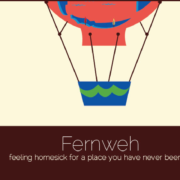
17. Fernweh= longing for a distant and unknown place


16. Kummerspeck= literally, grief bacon, in context it is having an emotional belly [or the need to eat to console your belly following a disappointment]


15. Innerer Schweinehund= inner pig/dog [it is that very powerful animal that lives within us that we must overcome when we have to do unpleasant things, like paying taxes and going for a jog at 6am before work]


14. Fremdschämen= feeling shame for someone else


13. Torschlusspanik= panic of the closed door [it is commonly employed to address a woman whose biological clock is ticking]


12. Treppenwitz= staircase joke [it occurs when the right joke comes to your mind when it’s too late, as if you have a pleasant meeting on the stairs and you have no time to say the right thing]


11. Lebensmüde= life tiredness


10. Weltschmerz= pain of the world


9. Weichei= soft egg [N.B. never say that to a waiter in Germany, for the actual meaning of the term is to address someone that is cowardly and has “soft balls”]


8. Backpfeifengesicht= face you would like to slap


7. Erklärungsnot= need to explain [have you been punished and didn’t even have the time to realize it? Then claim your Erklärungsnot!]


6. Sitzfleisch= seat meat [a character trait, to have big shoulders. For the German collective imagination it is like having a sac of meat on your seat due to an excessive state of boredom]


5. Purzelbaum= tumble tree [Somersault! Roll on the floor as if you were a piece of tree trunk]


4. Dreikäsehoch= three, cheese, above [a term for children employed towards that kid in the class that is taller compared to others, as tall as three pieces of cheese on top of another]


3. Zungenbrecher= tongue twisters [read about hilarious German tongue twisteres here]


2. Schattenparker= shadow parker [are you trying to be smart and park your car in the shade to protect it from the heat? This term is not actually meant as a compliment, but more as an insult]


1. Kuddelmuddel= unstructured mess


If you read until here and now your head is fully of screws and you are thinking that the German language is like a witty mosaic, an unstructured mess, then this is the word that you need right now.


Do not be discouraged, German is a very charming language and with some commitment everyone can succeed in mastering it. And studying German is also a good way to overcome the sense of Lebensmuedigkeit and stop using google translate which, let’s say it, never gets it right. And additionally to be taken for a Schattenparker that doesn’t commit does not please anyone. In the end, there are surely other Weltschmerz that are worse than learning German. After a thousand Kummerspecken overcome thanks also to the strength that you have gained by experiencing the Torschlusspanik, you can go out with your German friends and also take their order when you go to the restaurant. And this time without any of them feeling Fremdschämen for you.

You can finally be totally proud of having overwhelmed your Innerer Schweinehund. It is the same feeling of when, as a child, you felt so powerful after succeeding in a new intent. When you felt that you stood out like a Dreikäsehoch. You have gone a long way and now you have your Sitzfleisch. After a thousand nights spent on a thousand absurd Zungenbrecher until they become actual Ohrwurm. You will not be considered a Weichei anymore, and surely this time you will be able to talk to your new neighbors without fear of falling into any Treppenwitz. Except if it’s your girlfriend, in that case you’d risk a proper Backpfeifengesicht. Be careful not to combine any Kuddelmuddel or to use your Erklärungsnot!

If after all this you still want to stay and do not experience any sea sickness or Fernweh, there is nothing left to say or do than return to your inner child and gain thousands of well earned Purzelbaum!

Cover photo: © Alexandre Normand CC BY SA 2.0


Want to learn German in a vibrant environment? Look no further and check out the German courses that Berlino Schule organizes by clicking here!

50 steps to become the perfect Berliner

Today we would like to talk about a very special book, How to be German (in 50 easy steps). It is an unpretentious manual whose intention is to transform the reader in a perfect teutonic mutant, with all the merits, tribulations and idiosyncrasies that derive from it. Supported by ironic illustrations for each step it is written in German and English.

The approach is utterly ironic and amusing, and the 50 steps to follow span from the Apfelsaftschorle to German bureaucracy, to the much-hated GEMA to living bio, the fines on public transport, all the way to the beloved Kartoffelsalat. It also talks about the sacredness of Tatort on Sunday evenings and the importance of greeting cards for any special occasion. A spiritual compilation that has cheered my first U-Bahn trips and most often ripped me off in laughter in the religious silence that reigns on wagons, stirring up the discreet curiosity of my taciturn traveling companions who, after having looked at the title in cover, understood the reason of so much hilarity and would often exchange a smile.

The author, Adam Fletcher, is a Cambridge blogger and marketing expert who has been in Berlin for some years now; on his official page he describes himself as “a writer, an amateur chocolate eater and a professional napper,” as well as author of three enjoyable volumes such as “A Picnic for Perverts” (2012), “The Hipster Guide” (2013) and “Denglish for Better Knowers” (2014). After the tragicomic closing of Neukölln’s Hipstery store, Adam continues to write his satirical pieces and sell his line of gadgets through e-commerce, narrowing the target and type of products that he and his partner smuggle under a single, exhaustive label: “things that make us laugh.” The kit of the perfect Berliner hipster is one of the most genius and hilarious finds I have ever found. Take a look at yourself, if you do not believe it.

15. «MAHLZEIT!»

German has the reputation of being a pragmatic and literal language. Both nouns – like the nipple, for example, that was renamed with the romantic Brustwarze (“wart on the chest”), and the too explicit Antibabypille – and some of its expressions, which sometimes seem to describe not a mood or a state of mind, but the mysterious mechanics of an invisible car: “Es mennuft” (“works”), “Es geht” (“goes”), “Es passt” (“its fits good, it adapts”) , “Alles in Ordnung” (“all in place”).

This can serve as an appetizer, intrepid Ausländers, but to become real Germans you must learn to use the most pragmatic and disconcerting greeting of all – “Mahlzeit!”, Translated with “have a good meal!” or more literally with “meal time”. I had just arrived in Germany and while I was sitting in the canteen for lunch, my colleagues walked by the door and said to me, “Mahlzeit! ». Mahlzeit? Mahlzeit? Lunch time? Well, no doubt! That I’m eating is obvious. Right now I am clearly and loudly swirling a potato salad. I’m chewing, don’t you see? I know it’s a bit early for lunch, but I admit I missed breakfast. Do not judge me, have pity, please!

Only then do you understand that it is not a question. It’s a redundant, clumsy disguised statement, like a kid playing and stealing clothes from its parents, a form of greeting. So, for the sake of integration, over time you will start using it too. At first, it will sound a little bit weird, but I assure you that after a while you will find it rather fun, especially since in many regions of Germany you can use it at any time of the day. You can call someone at 4 am when you know for sure that they are still sleeping and wish them “Mahlzeit!” Brilliant. Perhaps you are wondering why you can’t add the -zeit suffix to other activities to create new and original greetings. But German literacy begins and ends just when you start to grasp its meaning. Glove is Handschuh (“hand shoe”), but do not dream of calling the Kopfschuh hat (“head shoe”). Do you see someone drinking? You can not wish him “Trinkzeit!”. You neighbours are having sex and don’t even bother covering up the moans? It is not admissible to ring the bell and wish them a warm ‘Fickzeit!’

Only «Mahlzeit», understood?

(Adam Fletcher and Ingo Herze, How to be a German/ Wie man Deutscher wird, Verlag C.H.Beck oHG, München 2013, pp.23-24)


Want to learn German in a vibrant environment? Look no further and check out the German courses that Berlino Schule organizes by clicking here!


Germans and English? They are very good, but not all of Germany is Hamburg or Berlin

For many foreigners coming to Germany without any knowledge of the language, it is quite reassuring to know that worst comes to worst they can rely on English. It won’t take long to realize that a lot of Germans speak it very well considering that it is their second language (better than Italians, to pick an example). Concurring to a study released by Education First (EF), Germans belong to the global Top 10 ranking for the best non-native english speakers, establishing themselves at the 9th place out of 72 countries taken into considerations. According to the research the average knowledge of English in Germany reaches the B1 level of the Common European Framework of Reference.

The most diligent Lands

Education First praised the efforts of Germany to better the standards of the last decades, with positive and encouraging results due in particular to the introduction of mandatory English classes in schools. Even Germany could however better its standards and reach a B2 level, just like Holland, which is ranked first. Moreover from the study it has emerged that the level of knowledge of English varies considerably according to regions and gender. The standard levels of knowledge of English are better in the north-western regions, led by Hamburg and soon after followed by Bremen and lower Saxony. Amongst the most english – friendly cities we also find Berlin, whereas the regions that have registered the worst levels of knowledge of the language are those confining with France, which prioritize French as a second mandatory language. The Saarland is in fact the Land that had the worst result.

© EF

Women know better: Regarding gender differences, women have demonstrated to be more fluent in English.

Cover photo © Flickr – Sascha Kohlmann CC BY SA 2.0 Man, Linkin Park, Teddy


Are you starting to learn German or wish to perfect your knowledge of the language? Then take a look at the courses that Berlin Schule organizes by clicking here!

Four German words that have no direct translation

It’s called Found in Translation and it is a very interesting graphic project realized by Anjana Iyer, presented in occasion of the initiative 100 days Project (The repeating of a creative task for 100 consecutive days and recording of each days efforts).

At the heart of the illustrations of this graphic designer from New Zealand are words that have a unique and original meaning which exists only in one language. There is no direct translation, more words are required and at times, as she did, also a nice drawing. It is through these that she tries to explain the meaning of these untranslatable words in other languages.

Rightly so amongst this list there are also some German words. Do you know of a word that is capable of conveying the German Fernweh, or so the longing of a place one has never been to? And of the German Schadenfreude, the “pleasure derived by someone from another person’s misfortune”? And what about that face that you would like to slap that in Germany is simply address through as Backpfeifengesicht? We too have forests, but perhaps since we never had the Grimm brothers we never felt the need to describe the feeling of being alone in amongst the trees as Germans did with Waldeinsamkeit.

————————————–
Do you wish to learn German or perfect your knowledge? Then take a look at the German courses that Berlino Schule organizes in Berlin here!

5 absurd rules of the German language that once mastered make you feel complete

It’s not enough that it is a language with thousands of inflexible grammatical rules, with words that have a difficult meaning to perceive and sounds at times almost impossible to pronounce. German, despite its reputation of being a rational language, at times presents cases when these rules are not rationally justified and lead to absurd paradoxes. And for us wretched born under another mother tongue, but have to learn how to live with German, there is nothing left to do than to fight against these absurdities every day.

1. The gender of certain nouns

Skirt is male, girl is neutral. For English speakers this is a very confusing situation and the only way to survive out of it is to forget the universal the and simply accept the ambiguous gender assignment for German nouns. Although there are certain exceptions, for instance words that end in -ung are always feminine and those that end in -er are masculine, most of the nouns articles have to be learned by heart because there are no rules to rely upon. And in this condition of anarchy yes, you will have to learn by heart every single common noun of things, animals and so on. Wouldn’t it be nice if the gender was at least deductible from the meaning of the word? Yes, but no: because a skirt is male, and a girl is neutral.
Not to talk about the chaos caused when universal nouns that belong to the collective imagery not only have a gender in the German world, but also a quite confusing one. So then we have the moon (der Mond- M), the sun (die Sonne- F) and death (der Tod-M), as we learned from that famous scene of a chess match against death in the swedish movie The seventh seal. Yet again, this is a different story…

2. Two-digit numbers

Counting in German is easy, but only until 20. Because from 21 onwards a tremendous rule kicks in by which numbers are read at “reverse”. It’s not twenty one, but one-and-twenty (einundzwanzig), it’s not twenty two but two-and-twenty, it’s not sixty seven but seven-and-sixty. Reading the number from the tenth before the unit forces a different way of thinking. In certain workplaces in Germany, those characterized by a majority of non-Germans, reading numbers in this way is forbidden. So to pronounce numbers in a way that is clear and understandable to everyone has led to the forming of a sort of baby talk by which you have to pronounce every digit once: 83 is eight-three, 98 is nine-eight… The problem arises when a German client calls you in and you get a 17 digit Amazon order pronounced overturned and at the speed of light. At that point there is nothing left to do other than rolling up your sleeves and getting to work…

3. Dates

The problems with German numbers aren’t over. For unexplainable reasons, these people invented an entirely original way of reading the years of a date. First thing, the first two digits are separated from the last two. So far so good, as we have the same system in English. In German however amongst the two groups of digits they place a hundert (hundred). Neunzehnhundertzweiundneunzig. The again, why hundred? Possibly because it implies the calculation 19×100=1900 (obvious much?), or possibly because it is a way to distinguish dates from normal numbers. The choice is however debatable. For our luck the dawn of the new century saved us all: from 2000 onwards they gave up to read zweitausend, zweitausendeins, zweitausendzwei… Twothousand, twothousand and one, twothousand and two…

4. Separable verbs

Verbs in English have a preposition. In German instead the prepositions are stuck directly to the verb, thus creating a myriad of countless words that have the same root but different meanings, filling up the already well-supplied dictionary. In this way the same verb can mean everything and the opposite of everything: nehmen (to take), according to the prefix it has at the front may mean to accept (annehmen), to remove (entnehmen), to lose weight (abnehmen), to gain weight (zunehmen), to behave (benehmen)… Combined with the fact that almost all of these prefixes are separable from the verb, and that often the separate prefix may be moved at the end of the sentence, make it so that you can never know what a person is trying to say until he utters the last word. An example?
“Ich gebe die Aufgabe… ab.” I hand in the task.
“Ich gebe die Aufgabe… auf.” I give up the task.

5. The rigid position of the components of a sentence

I often thought that writing a phrase in German is like playing a tetris. Yes because in this language every component of the sentence has its own rigid position that must be respected, which also varies according to the type of sentence: when asking a question the conjugated verb has always the first position, in a positive sentence it has the second position, in a subordinate sentence it occupies the last position (and here we go back to the aforementioned problem by which until the person in front of you has pronounced the last word one can’t know what he means). But not only. The subject will always occupy the first position in a positive sentence unless, usually, you want to start with an adverb for instance, which in that case requires to make an inversion. And so on. The strange thing is that this is a feature of languages that don’t have cases, whereby the role of the components of the sentence is defined by their position. German decided instead to keep both: cases and positions. The best part will be when you’ll move to the most advanced grammar rules and find out that there is also a predetermined order to position the various complements. It is called TeKaMoLo and no, it is not a new generation medication, but it’s the key to remember the order of the complements: Temporal (when), Kausal (why), Modal (how) and Local (where).

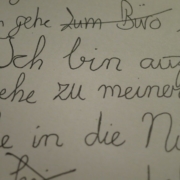
Photo: “Practicing my old school writing for German class” © Alper Çuğun – CC BY SA 2.0

——————-
Do you wish to learn German or perfect your knowledge of the language? Then take a look at the German courses that Berlino Schule organizes in Berlin here!

Bud Spencer, Di Caprio, Michael Fassbender: 15 celebrities that unexpectedly speak German 

It’s true, actresses, actors and singers have a talent when it comes to the recognition and reproduction of sound.

German however remains a language that few people, at least in the past generations, decided to learn unless it was for work reasons. What follows is a list (partly inspired from the one made by Smosh) of American, but not only, celebrities that can modestly speak German, as the videos demonstrate.

Bud Spencer

The actor from Naples was a real star in Germany, as so was his colleague Terrence Hill. His autobiography reached the vectors of sale a few years ago. All his movies were distributed in cinemas and in the ’70s it was common to find him on German TV to promote his movies. He studied German in school in Italy and never failed to demonstrate it, as this video shows.


Sandra Bullock

The Oscar winning actress with The Blind Side, and for a few years the most paid actress in the world, is the daughter of a German singing teacher, herself the daughter of a missile scientist that lived in Nuremberg. It was in Baveria that her father, the American John Bullock, at the time serving the American army, met her mother and began a love story lived through the States and Germany. Although she was born in Arlington, Sandra Bullock lived in Nuremberg until the age of 12.

Chris Pratt

The Guardians of the Galaxy start learned (well) German in school. The father, American, has German origins, but not only: as he himself admits in the past he nurtured a true passion for Goethe’s language.

Leonardo Di Caprio

On the one hand, as his surname discloses, he has Italian origins. On the other hand, from his mother’s side, German grandparents. It was his grandmother, from a small town close to Düsseldorf, that taught the Oscar winning actor that he uses at times to make his German audience smile.

Mark Strong

One of the greatest “supporting actors” of this century, the excellent Mark Strong has an Austrian mother, but not only. He studied law in Munich’s university for one year prior to dedicating himself completely to acting, his passion since youth.

Kirsten Dunst

The American actress holds to this day her German citizenship. The father was in fact a doctor from Hamburg that moved to the States and her mother (that has Swedish origins) worked for Lufthansa. German is thus a family affair for the Dunst family

Paul McCartney

McCartney learned German in school as a child. It became useful when the band, unknown at the time, made Hamburg its continental base, performing there any time they had the chance. The first time was in 1960 when, as reported here “Allan Williams, owner of a music cafè in Liverpool had to organize a tour in Germany for “Derry and the Seniors”, a Liverpool-based rock band. But things went wrong and Williams was forced to find a substitute band in a short amount of time. He asked The Beatles, whom no one at the time heard of, that immediately accepted”. Bild also talks about it here

Terrence Hill

Unlike Bud Spencer, Terrence Hill (aka Mario Girotti) speaks German both because he studied it and because his mother came from Dresden. It was there that, along with a chemist father working for the Schering, he moved when he was 4 in 1943, in the midst of the second world war. He lived there until 1945 with his grandparents in the close Lommatzsch, prior to returning to Venice, his father’s city.

Gene Simmons (Kiss)

The singer of the band Kiss was born in Israel (his real name is Chaim Witz). His mother, a Hungarian jew, lived through the time of concentration camps. He spoke German and taught it, and his son today speaks Hebrew, Hungarian, German and English

Vladimir Putin

From the man of KGB to Dresda, eastern Germany, both before and after the fall of the Wall, Putin could have not not known German….

Michael Fassbender

He was born in Germany, in Heidelberg to be precise, even though he always kept his Irish citizenship. In Bastards without Glory that language learned due to the origins of the father (a known German chef) allowed him to convince Tarantino to give him the role that served him as a trampoline for his career.

Kim Cattrall

The Sex and the City star, although having a well-established career in English speaking countries, in the 80s as she was married to Andre J.Lyson (they then divorced in 1989) lived in Frankfurt.

Karl Urban

The Lord of the Rings star (do you remember Éomer?) and of Star Trek, was born and raised in New Zeland, but his father is German and always spoke to him in his language.

Sarah Chalke

Anyone who watched Scrubs knows this very well: Sarah Chalke speaks very good German. It is the series that mostly insisted on her quality, building up different funny scenarios. Her grandparents from her mother’s side live in Peez, close to Rostock.

Donna Summer

The american singer that passed away in 2012 lived for long in Germany throughout the 70s as she became the protagonist of the theatre version of Hair. There she met Austrian Helmut Sommer with whom she had a child with. This is where here surname comes from (she was born Donna Gaines).


© PROGage Skidmore CC BY SA 2.0

—————-

Do you wish to make it one day on this list? Then take a look at the German courses that Berlino Schule organizes in Belrin here!